

The AI Landlord: New Tools. Same Law.
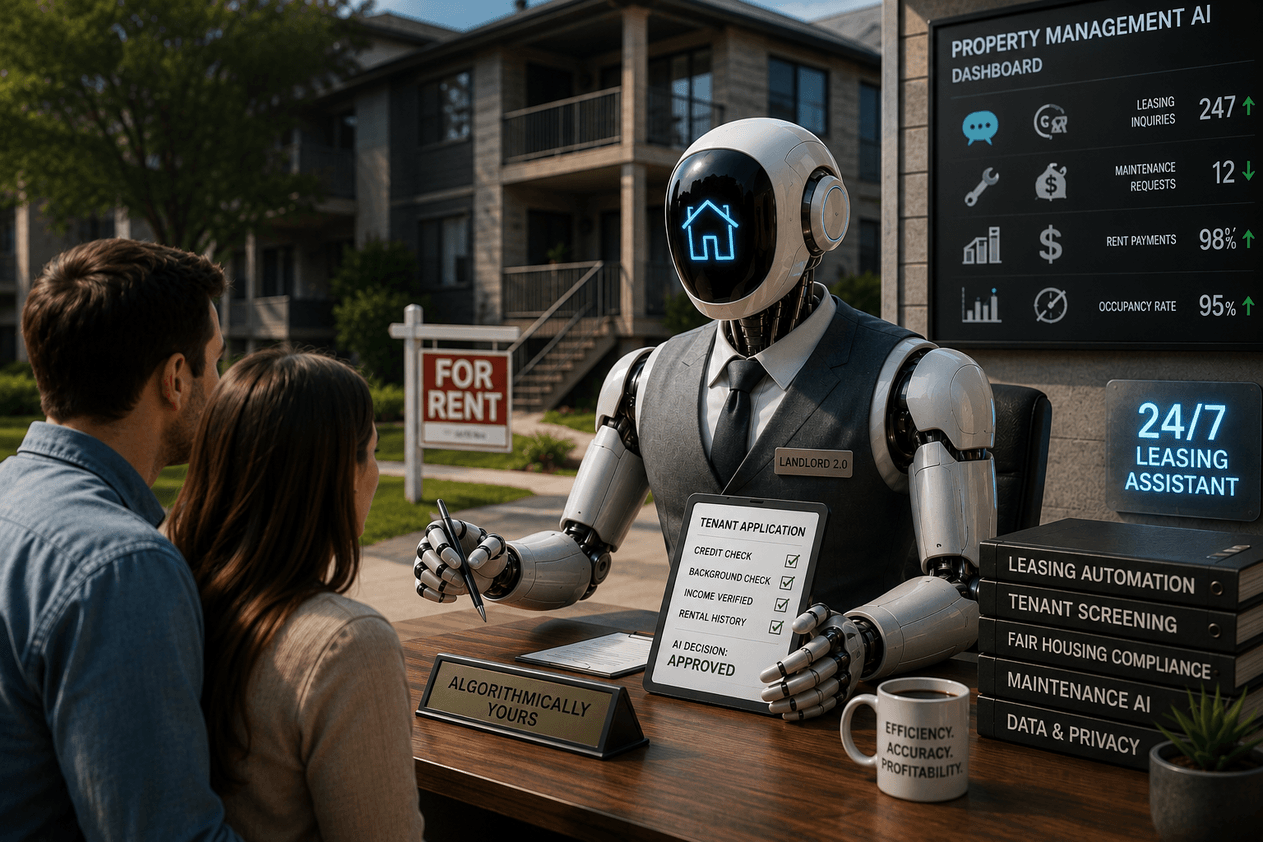
From leasing and maintenance requests to tenant screening and rent collection, artificial intelligence is transforming rental housing. But some responsibilities may not be so easily delegated.
When we began our legal careers over three decades ago, the typical landlord-tenant relationship involved phone calls, in-person meetings, paper applications, and face-to-face interactions. Nobody asked for our input or gave us advanced notice, but somewhere along the way, this changed.
Today, a prospective tenant can search for an apartment, schedule a tour, submit an application, sign a lease, and pay a security deposit without ever speaking to a human being.
The benefits of AI-powered tools are obvious: greater efficiency, lower administrative costs, and faster service. A rental business may run like a well-oiled machine, and tenants may applaud the convenience. But customer satisfaction and legal compliance are not always the same thing.
Housing is a highly regulated industry, particularly in the Bay Area. Landlords and their agents should understand that legal responsibility does not disappear simply because a task has been delegated to software. An automated process may be efficient, but it must also be compliant.
The Danger of Mistaking Automation for Judgment
For housing providers and property managers overseeing large portfolios, these technologies can add tremendous value. But while technology can simplify administrative tasks, it cannot eliminate legal obligations—or replace sound judgment.
Increasingly, we see housing providers place unwarranted confidence in automated systems simply because they appear sophisticated. The phenomenon is not unlike tenant screening. There is no shortage of tools that can help evaluate prospective residents, and many are extremely useful. Yet many landlords housing problematic tenants learn the hard way that rental risks are not always reflected in a credit report, background check, or screening score.
The same principle applies to artificial intelligence. Technology can assist decision-making, but it is not a substitute for critical thinking, experience, and human oversight. Some risks remain hidden beneath the surface, and some situations simply require a closer look.

Fair Housing in the Age of Algorithms
One of the most significant legal concerns surrounding AI involves fair housing compliance.
Many modern platforms help landlords market units, prioritize leads, screen applicants, and communicate with prospective tenants. While these systems may appear neutral, housing providers remain responsible for ensuring that their practices comply with federal, state, and local fair housing laws. Consider a few examples.
A prospective tenant receives an immediate response to an online inquiry, while another never hears back. An applicant is flagged for additional review without a clear explanation. A housing advertisement seems to reach certain audiences while missing others altogether.
None of this may be intentional. In fact, the housing provider may not even realize it is happening. Yet fair housing laws often focus less on what was intended and more on what actually occurred.
The lesson is a simple one: technology should not be treated as a black box. Housing providers remain responsible for ensuring that the tools they use operate fairly and consistently.
Some Conversations Still Require a Human Being
Not every issue can be reduced to an automated workflow.
Imagine a tenant sends a message stating that they suffer from anxiety and need an emotional support animal despite a property's no-pets policy. A human property manager who has been following Bornstein Law may recognize this as a potentially reasonable accommodation request that requires further review. An automated chatbot, however, may respond that pets are prohibited.
What appears to be an efficient automated response could later become evidence that the housing provider failed to engage in the interactive process required under fair housing laws.

Maintenance Requests and Habitability Concerns
Artificial intelligence is also finding its way into maintenance management systems. These platforms can categorize service requests, assign priorities, and route work orders automatically. In theory, this helps ensure that repairs are handled more efficiently.
The question foremost on the minds of landlords and property managers should be: What happens when the system gets it wrong?
Suppose a tenant reports that mold is spreading throughout a bedroom and aggravating a child's asthma. An automated platform categorizes the complaint as routine maintenance and schedules service several weeks later. Or imagine repeated complaints about a lack of heat, a plumbing failure, or an electrical hazard are mistakenly routed into a general queue without recognizing the potential health and safety implications.
From a legal perspective, courts are unlikely to focus on whether the mistake was made by a property manager or an algorithm. The more important question may be whether the housing provider responded reasonably after receiving notice of the problem. Housing providers should ensure that automated systems include meaningful human oversight, particularly when habitability issues may be involved.
Privacy and Data Security
The modern rental experience generates an extraordinary amount of information.
Applications routinely include income records, banking information, credit reports, identification documents, employment histories, and communication logs. AI-powered platforms may analyze, retain, and utilize this information in ways that tenants neither see nor fully understand.
As these technologies become more sophisticated, important questions emerge:
- What information is being collected?
- How long is it retained?
- Who has access to it?
- What happens if a data breach occurs?
While the convenience of centralized digital systems is undeniable, the responsibility to safeguard sensitive information remains.

AI-Generated Leases and Notices
In many respects, this is simply a modern version of an old problem. For decades, our office has encountered housing providers relying on outdated forms, recycled templates, and documents downloaded from the Internet. Artificial intelligence has made the process faster, but not necessarily more reliable.
Today, a housing provider can ask an AI platform to generate a lease, rent increase notice, buyout agreement, house rules, or tenant communication within seconds. The resulting document may appear polished, professional, and legally sophisticated. That does not necessarily mean it is correct.
Housing regulations vary dramatically from one jurisdiction to another. A notice that may be perfectly acceptable in one city could be defective in another. Rent-control ordinances, relocation requirements, disclosure obligations, and procedural rules often differ from city to city throughout the Bay Area.
The risk is not that AI produces gibberish. The risk is that it produces something that sounds authoritative while containing subtle legal errors. Compounding the problem, housing forms are constantly evolving. Agencies routinely revise notices, disclosures, and procedural requirements, rendering prior versions obsolete. Earlier this year, for example, we reminded San Francisco housing providers that the Rent Board had made important updates to several of its forms. In some situations, using an outdated 2025 version could prove fatal to an otherwise valid case.
Housing providers should remember that AI systems generally do not verify whether a form has been updated, superseded, or revised by a local agency. They simply generate a document based on the information available to them. And if there is a mistake, there are plenty of talented tenant attorneys ready and willing to find it. There is no reason to hand them the ammunition.

The Discovery Problem
Another consideration may not arise until a dispute reaches litigation. When lawsuits occur, electronic records often become evidence. Automated communications, chatbot conversations, screening recommendations, maintenance logs, and system-generated decisions may all be subject to scrutiny.
A housing provider who relies heavily on automation should assume that those records may someday be reviewed by opposing counsel, a judge, or a jury.
"The software decided that" may not be a particularly persuasive defense.
The more decisions delegated to technology, the more important it becomes to understand how those decisions are made and documented.
Trust, But Verify
Artificial intelligence is poised to become a permanent fixture in the rental housing industry, and in many respects that is a good thing. Automation can improve efficiency, reduce costs, and create a smoother experience for both housing providers and residents.
But rental housing is ultimately a people business governed by legal rules. Fair housing compliance, habitability concerns, disability accommodations, and local regulatory requirements often require judgment, context, and discretion—qualities that software cannot fully replicate.
The most successful housing providers will be those who embrace technology without surrendering oversight. AI can be an extraordinarily useful tool, but it is not a substitute for compliance, experience, or common sense. As new technologies continue to reshape the landlord-tenant relationship, Bornstein Law remains committed to helping housing providers navigate the legal issues that arise when innovation meets regulation.