
Albany Councilmembers Direct Staff to Come up With Ideas to Strengthen Tenant Protections

From left to right: Councilmembers Preston Jordan, John Anthony Miki, and Robin D. Lopez.
The City Council has taken its first step toward expanding tenant protections, though rent control appears to be off the table—for now.
When we first started practicing law three decades ago, we could count the number of Bay Area cities with rent and eviction controls on one hand. Today, that number has grown to seventeen, and the steady spread of rent regulations shows no sign of slowing down.
California’s housing policies didn’t get here overnight. Over nearly a century, what started as a single-city experiment has evolved into a statewide regulatory scheme layered with a maze of local rules. And the complexity only grows when you factor in differences between cities and counties, property types, building age, tenant status, ownership structures, and the number of rental units.
Not long ago, rent control was mostly discussed in big urban centers. Now, some version of rent regulation or expanded tenant protections has reached places like Antioch and other Bay Area cities that historically weren’t hubs of tenant activism. The phrase “the rent is too damn high” was no longer just a rallying cry from tenant groups like My Eden Voice—it started resonating with a much broader audience.
And when big statewide efforts to repeal or significantly weaken the Costa-Hawkins Rental Housing Act failed, the strategy shifted. Instead of changing state law, advocates began pushing for new restrictions city by city.
We explored this trend in a previous article on the rent and eviction control reckoning that followed the pandemic. As housing providers were still dealing with the fallout from COVID-era regulations, a new wave of rent and eviction controls began appearing in places where no one would have expected them.
In a death by a thousand cuts, will Albany be the next domino to fall?
At its March 2 meeting, the Albany City Council signaled it’s open to discussing new rules for landlords. Councilmembers appear ready to consider additional tenant protections—even though the available data suggests new regulations may not be necessary.
In fact, the City’s own staff agenda report states that “The City has no evidence indicating widespread or systematic discrimination or harassment is occurring in the City’s rental housing market.” Despite that conclusion, Councilmembers Jordan, Miki, and Lopez still want to explore new tenant protection measures. These kinds of proposals, after all, are politically fashionable.
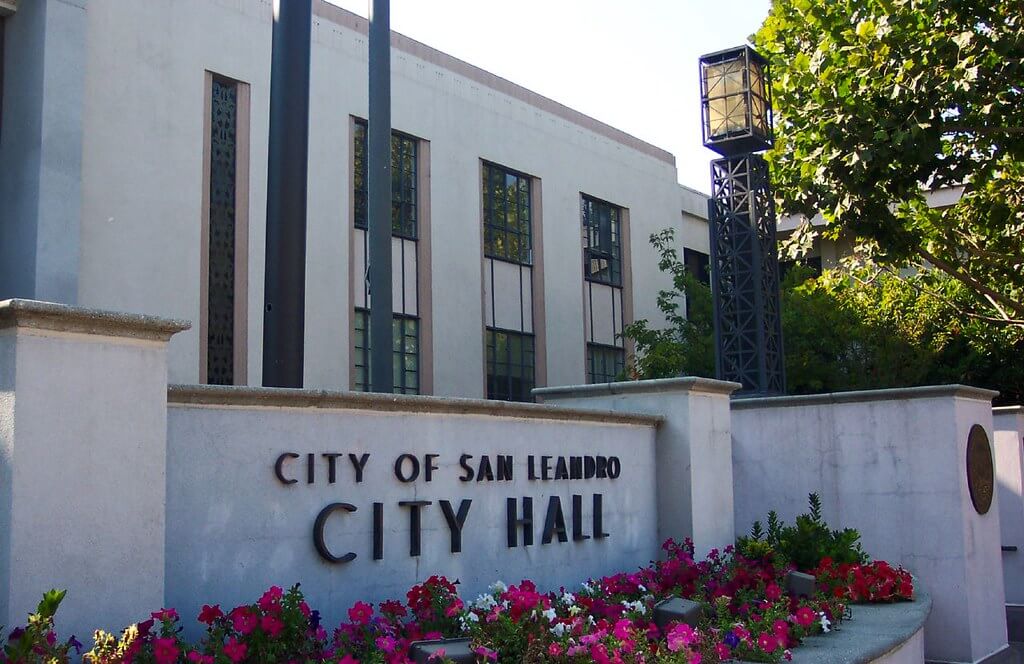
Albany’s discussion comes not long after the passage of a sweeping rent control ordinance in San Leandro. But, much like Albany, there’s little evidence that San Leandro has experienced widespread tenant displacement caused by rising rents.
In reality, many of the protections renters already have under the Tenant Protection Act of 2019—including its rent cap and just-cause eviction requirements—have proven more than sufficient. The law, enacted through AB 1482 and later strengthened by SB 567, already imposes significant limits on housing providers across the state.
Wins and Losses for Albany Property Owners
With its first official vote on expanding tenant protections on March 2, the Albany City Council gave us a preview of what may—and may not—be coming next.
Rent Stabilization — Off the Table (for Now)
City staff noted that rising rents are not a widespread problem in Albany. Because of that, we don’t expect the City to pursue lowering the current rent cap below what state law already requires (5% plus the local consumer price index, or 10%, whichever is lower).
That said, there’s still reason for concern. Some housing that is currently exempt from statewide rent and eviction controls could soon be pulled into a new set of local regulations if Albany officials move forward with their proposals.
So what remains on the table?
In a motion during the meeting, Councilmember Preston Jordan asked city staff to begin drafting three potential ordinances.
Proposal #1: Expand “Just Cause” Eviction Protections
The first proposal would extend just-cause eviction rules to tenants in Albany who are currently not covered by statewide eviction protections.
If adopted, the following types of rentals could become subject to just-cause eviction rules:
-
Detached single-family homes
-
Condos and duplexes—even if the owner lives in one of the units as their primary residence
-
Any rental unit built within the last 15 years, including ADUs
If this measure moves forward, Albany housing providers may have to adjust to a new framework that strictly limits the reasons they can use to terminate a tenancy.
Proposal #2: Require Landlords to File Eviction Notices with the City
Another proposal would impose another administrative burden by requiring landlords to submit a copy of any eviction notice to the City of Albany.
Proposal #3: Require an Albany Business License to Evict a Tenant
Finally, the Council is considering a rule that would require housing providers to obtain an Albany business license. Without one, landlords could be barred from moving forward with an eviction.

This idea comes straight out of the playbook used in Oakland, where landlords must obtain and renew a Business Tax Certificate every year. Failing to do so can create a world of problems. While there are other penalties, here are a few examples that illustrate why landlords don’t want to find themselves in that position.
No Rent Increases
As of April 2025, landlords who are delinquent on business taxes cannot issue rent increases.
Eviction Restrictions
Housing providers cannot carry out certain “no-fault” evictions—such as owner move-ins or substantial repairs—if they do not have a current certificate.
Locked Out of the Rent Board
Landlords cannot file petitions for rent increases or fully participate in proceedings before Oakland’s Rent Adjustment Program (RAP) until all required taxes and fees are brought current.
During the meeting, several Albany councilmembers expressed surprise and concern when they learned that roughly 1,000 rental units in the city are currently out of compliance because the owners have not obtained a business license. All we can say, folks, is to get your business licenses now if you haven’t done so, and this wisdom can be imported to other locales throughout the Bay Area:
Make sure your units are properly registered and that you have the licenses and credentials required to operate a rental business.

And we've saved the best for last.

Anti-Harassment and Discrimination Protections
According to the City’s own findings, there is no endemic harassment or discrimination to combat in Albany's rental market. Even so, its annual staff report notes that it remains important for both tenants and property owners to understand their rights and responsibilities under existing fair housing laws. To that end, the City suggests expanding education and outreach efforts, an approach supported by Albany’s Housing Advisory Commission and some members of the public.
That didn’t stop Councilmember Preston Jordan from advancing several steps forward by making a motion directing staff to begin drafting a framework for potential anti-harassment and anti-discrimination protections.
Among the ideas floated during the discussion:
-
Explicit protections for non-nuclear, non-traditional, and multi-generational families
-
A prohibition on retaliation tied to certain tenant organizing activities
-
Defining harassment to include threats related to immigration enforcement
-
Expanding the definition of harassment to include actions such as refusing to accept rent, repeated unlawful entry, or interrupting essential services
These types of tenant anti-harassment ordinances have become increasingly common across the Bay Area and throughout California. They typically build on existing state laws by creating local enforcement mechanisms and civil penalties aimed at preventing landlords from pressuring tenants to move out—particularly in cities with rent control or just-cause eviction rules.
Cities adopting these laws often say they are filling perceived gaps in state protections.
What Cities Now Call “Harassment”
Many of these ordinances define harassment very broadly. Common examples of prohibited conduct include:
-
Repeated or intrusive entry into a tenant’s unit
-
Interrupting housing services such as parking, storage, or laundry
-
Threatening to contact immigration authorities
-
Delaying or refusing repairs
-
Threatening eviction without legal grounds
-
Misrepresenting a tenant’s legal rights
-
Pressuring tenants to accept buyout agreements
-
Refusing to accept lawful rent payments
Some ordinances even allow harassment claims based on patterns of behavior, meaning a series of relatively minor disputes between a landlord and tenant could potentially be combined into a single legal claim.

Our Criticism — and the Litigation Risk
We’ve said it before: anti-harassment ordinances can be an excellent career path for opportunistic lawyers looking to sue landlords and send their kids to private colleges. These laws often add another layer of penalties on top of conduct that is already prohibited under existing law—and in many cases allow tenants to recover enhanced or multiplied damages when housing providers make even honest or relatively minor mistakes.
In some instances, the way these ordinances are written is so broad that a landlord could conceivably face a harassment claim over something as minor as a contractor showing up late for a scheduled repair appointment.
Routine property management decisions can also be reframed as harassment. One of our main concerns is the tendency to presume retaliation whenever a landlord raises the rent or makes changes to the tenancy shortly after a tenant complains about something.
For that reason, housing providers should be mindful of timing. The sequence of events matters. A large rent increase that follows closely on the heels of a tenant complaint—such as a maintenance issue—can create the appearance of retaliation, even if that was never the landlord’s intent. Housing providers should be careful to avoid the optics that their actions are meant to punish a tenant or pressure them to move out. In today’s regulatory climate, even routine decisions can be scrutinized through that lens.
A special thanks to our industry partners
Although Bornstein Law is dedicated to educating housing providers on an ever-expanding regulatory regime, we don’t work on an island and have to give credit where its do. Our friends at the Albany Property Rights Advocates (APRA) have been wonderful in alerting owners about what is being discussed and changes that may be on the horizon.