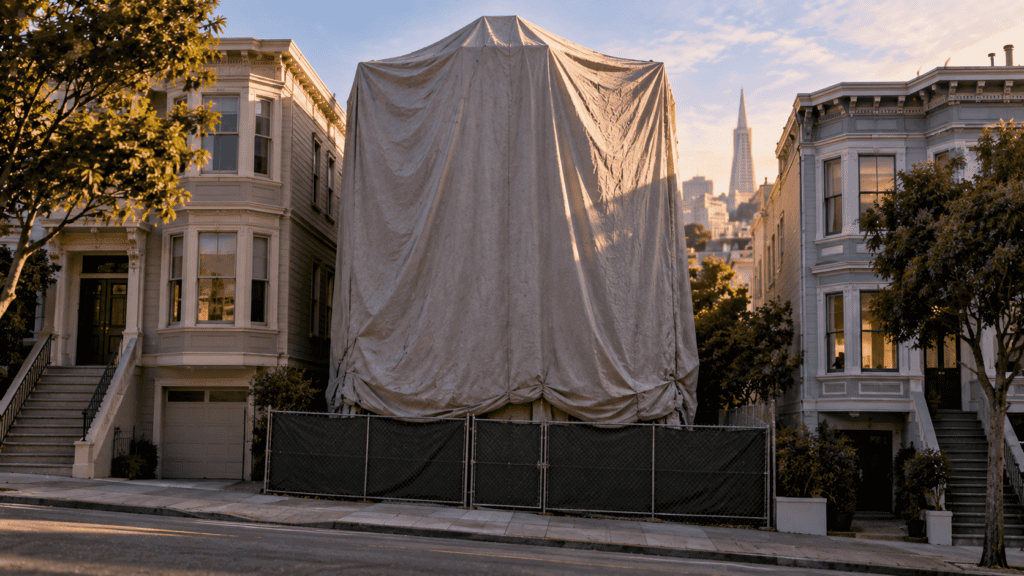
San Francisco’s vacancy tax just got knocked out in court, and it didn’t take us long to wonder about the obvious cousins across the Bay. Oakland has had a vacancy tax since voters approved Measure W in 2018, and Berkeley now has one of its own. Both remain very much alive.
So what does the San Francisco decision mean for either of them? We don’t know, and the three ordinances are different enough that it would be irresponsible to suggest that a ruling about San Francisco automatically takes down Oakland or Berkeley. But once you understand why the Court of Appeal rejected San Francisco’s tax, it’s difficult not to wonder where that reasoning goes next.
As it turns out, people in Berkeley are wondering the same thing.
You can leave the rental business — and stay out of it
San Francisco voters approved Proposition M in 2022. The measure imposed a potentially substantial tax on certain residential units kept vacant for more than 182 days during a tax year. Several property owners and landlord organizations challenged it, arguing, among other things, that the tax collided with the Ellis Act — the California law protecting an owner’s right not to offer residential property for rent.
The facts make the dispute easier to understand than the legal terminology does. Eric and Andrew Debbane lived in a five-unit building and kept other units for their own personal use. Another plaintiff was retired and simply didn’t want the responsibilities of being a landlord anymore.
San Francisco wasn’t literally ordering these owners to find tenants. The city argued that owners still had choices: they could live in the units, pay the tax, or potentially use them for other purposes, such as an office, personal gym or private art studio.
The Court of Appeal wasn’t persuaded. It rejected the city’s “other uses” argument and concluded that the Ellis Act protects not only an owner’s ability to leave the rental business, but also the right not to enter or reenter it. The court affirmed the judgment prohibiting San Francisco from administering or enforcing Proposition M.
Interestingly, Daniel Bornstein was talking about this very tension years before San Francisco’s vacancy tax reached the courts. Asked in an interview about the then-proposed tax, he put the issue in considerably less legalistic terms:
At the time of that interview, Oakland already had a vacancy tax while San Francisco was still contemplating one. Daniel went on to describe the practical tension directly: an owner could decide not to rent a property and then find himself taxed precisely because he made that choice.
Years later, that tension is no longer hypothetical in San Francisco. It has been litigated all the way to a published appellate decision.
Oakland has one of these, too
Oakland voters approved Measure W in 2018. Its Vacant Property Tax isn't a carbon copy of San Francisco’s. Oakland generally considers property vacant when it is “in use” for fewer than 50 days during the calendar year, subject to exemptions, and the measure reaches beyond residential housing to certain nonresidential and undeveloped property.
Oakland is also still administering it.
None of that means the San Francisco ruling invalidated Oakland’s tax. It didn’t. The Court of Appeal was considering San Francisco’s ordinance, and the differences between the laws could matter considerably.
Still, consider the narrower question. An Oakland owner has residential property and decides not to offer it for rent. The property becomes subject to the vacancy tax. We now have a published California appellate decision holding that the Ellis Act protects the right not to enter or reenter the residential rental business, and that San Francisco could not put what the court called a “prohibitive price” on that choice.
Does that reasoning have implications for Oakland? We don’t know.
But Oakland’s vacancy tax is still very much alive. After what just happened in San Francisco, though, Oakland property owners have a new appellate decision to consider.
And then there’s Berkeley
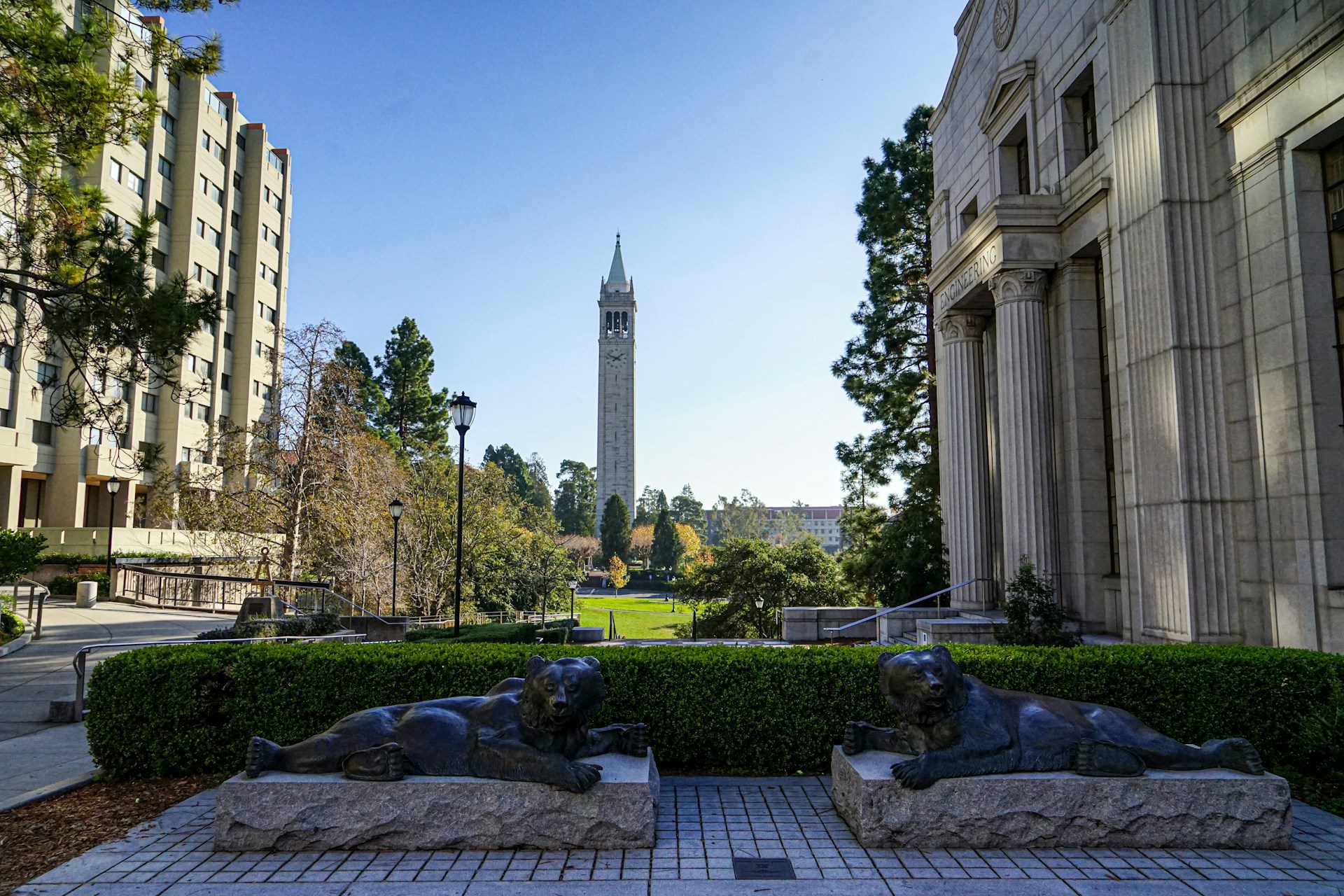
Berkeley has an Empty Homes Tax of its own. Voters approved it in 2022, and the tax took effect in 2024. It generally applies when a covered residential unit is vacant for more than 182 days during a calendar year, subject to exemptions and periods of vacancy that don't count toward the threshold.
Unlike Oakland's broader measure, Berkeley's tax was designed specifically around residential units. And unlike San Francisco, Berkeley has already been collecting it.
That last distinction could become important.
We reached out to Krista Gulbransen, executive director of the Berkeley Property Owners Association, to see what property owners there are making of the San Francisco decision. BPOA is now considering its legal options, she told us, although she thinks there may be a simpler first step than another lawsuit: Berkeley could stop collecting the tax while the implications of the San Francisco decision are sorted out.
Because Berkeley's tax was enacted by voters, Gulbransen points out, simply undoing the measure isn't necessarily straightforward. Her preference would be to suspend collection without trying to unravel the underlying law while the legal questions play out.
There is also a complication San Francisco largely avoided: Berkeley has already collected the tax. That raises the possibility of refund claims from owners who have already paid — one of several issues BPOA is now considering.
“So it's more complex than just the outcome of this one case,” Gulbransen said.
That's probably the safest conclusion for now. The San Francisco decision answers what happened to San Francisco's tax. It doesn't automatically answer what happens next in Berkeley or Oakland, and the ordinances themselves aren't identical. Berkeley's tax is directed at qualifying vacant residential units, while Oakland's measure reaches a broader universe of property, including certain nonresidential and undeveloped parcels.
Those differences could matter considerably.
Berkeley wanted an answer, too
This isn't simply BPOA trying to draw a connection between the cities. Berkeley's Rent Stabilization Board has been asking about the San Francisco decision as well.
Its September 17 agenda included an information item with a title that didn't leave much to the imagination:

But the discussion never happened.
According to Gulbransen, who was following the meeting, the Board wanted an update from its general counsel in light of the recent San Francisco decision. Counsel wasn't prepared to provide it, she said, so the matter was pushed to the Board's November meeting.
What will come of that discussion remains to be seen. The Rent Board hasn't answered the question. For now, it has simply scheduled another opportunity to talk about it.
That alone is noteworthy. The San Francisco decision is barely out, and Berkeley is already asking what it could mean for a vacancy tax the city is currently collecting.
We've seen another version of this question before
There was something familiar about all of this.
Not long ago, we wrote about New York City's new surcharge on certain residential properties that aren't used as primary residences — commonly described as a pied-à-terre tax. New York's law is different, the legal issues are different, and nothing in the San Francisco decision tells us whether New York can impose that surcharge.
What caught our attention then, however, was the larger question behind it. Governments increasingly aren't satisfied simply knowing who owns residential property. They also want to know how it is being used.
New York asks whether a property is really someone's primary residence. Berkeley asks how many days a residential unit was vacant. Oakland asks whether property was sufficiently “in use.” San Francisco tried to impose a tax when certain residential units remained vacant for more than 182 days during a tax year.
Different laws, different standards and different legal questions. But there is a family resemblance.
There is also an interesting postscript. When we wrote that article, San Francisco's vacancy-tax appeal was still pending. We noted that the courts would eventually have to sort through the legal limits of some of these policies.
Now one of them has.
And that brings us right back to Oakland and Berkeley.
So why hasn't someone challenged them already?
That was one of our first reactions when we started looking at Oakland. Voters approved Measure W in 2018, and Berkeley's tax has been in effect since 2024. If there is a serious legal question lurking in either ordinance, why hasn't somebody already taken a run at it?
There could be any number of legal explanations. But there is also a practical one worth considering: litigation like this takes time, money and an unusual amount of stamina.
Look at what stood behind the San Francisco challenge. Individual property owners were joined by the San Francisco Apartment Association, the Small Property Owners of San Francisco Institute and the San Francisco Association of Realtors. The California Apartment Association participated as an amicus, with Pacific Legal Foundation authoring its brief.
That's a remarkable amount of organizational and legal firepower behind what started as a challenge to a local vacancy tax. And none of it happened quickly. The case had to be developed and litigated in Superior Court, where the property owners prevailed, and then defended when the city appealed. That meant years of legal research, briefing, hearings and appellate work, with multiple organizations helping marshal the resources necessary to keep the case going.
Voters approved Proposition M in 2022. The appellate decision arrived nearly four years later.
For an individual property owner staring at a vacancy-tax bill, mounting that kind of challenge would be daunting. The legal expense could become far more consequential than the tax being challenged, with no guarantee of winning at the end.
Which leaves a fairly straightforward question sitting underneath all of this:
San Francisco now has an appellate answer to that question in the context of Proposition M. Whether Oakland or Berkeley will eventually produce their own answer is another matter.
Noni had a considerably shorter answer
Not everyone reacted to the San Francisco decision by parsing appellate language.
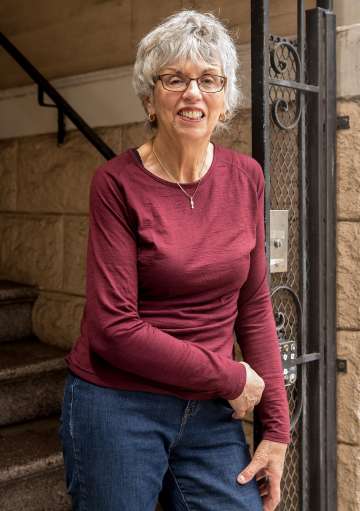
Noni Richen, a longtime San Francisco property owner and former leader of the Small Property Owners of San Francisco Institute, was one of the people celebrating the ruling. When the San Francisco Standard asked how she felt about the decision, her response consisted of one word:
Richen owns a four-unit property, rents two of the units and keeps the others available for friends and family. Her circumstances get to the human question beneath a lot of the legal argument: what obligations come with owning residential property, and how far can government go in trying to influence what an owner does with it?
The appellate court has now answered part of that question in San Francisco. The debate around it plainly isn't over.
So where does that leave the East Bay?
For now, Oakland's Vacant Property Tax remains in place. Berkeley's Empty Homes Tax remains in place. The San Francisco decision did not automatically invalidate either one.
The ordinances are different, their structures are different, and any challenge would have to deal with the language and operation of the particular law at issue.
But the legal landscape is no longer quite what it was before the Court of Appeal handed down its decision.
There is now a published California appellate decision concluding that the Ellis Act protects not only an owner's right to leave the residential rental business, but also the right not to enter or reenter it. Oakland continues to impose a vacancy tax that can reach residential property. Berkeley continues collecting an Empty Homes Tax, while its own Rent Stabilization Board has already begun asking what the San Francisco decision could mean for its program.
BPOA is considering what comes next. Berkeley's Rent Board is expected to revisit the subject in November. And property owners elsewhere in the Bay Area now have a new appellate decision to read alongside their own local ordinances.
We don't know what happens next in Oakland or Berkeley.
But across the Bay, people are starting to ask the question.