
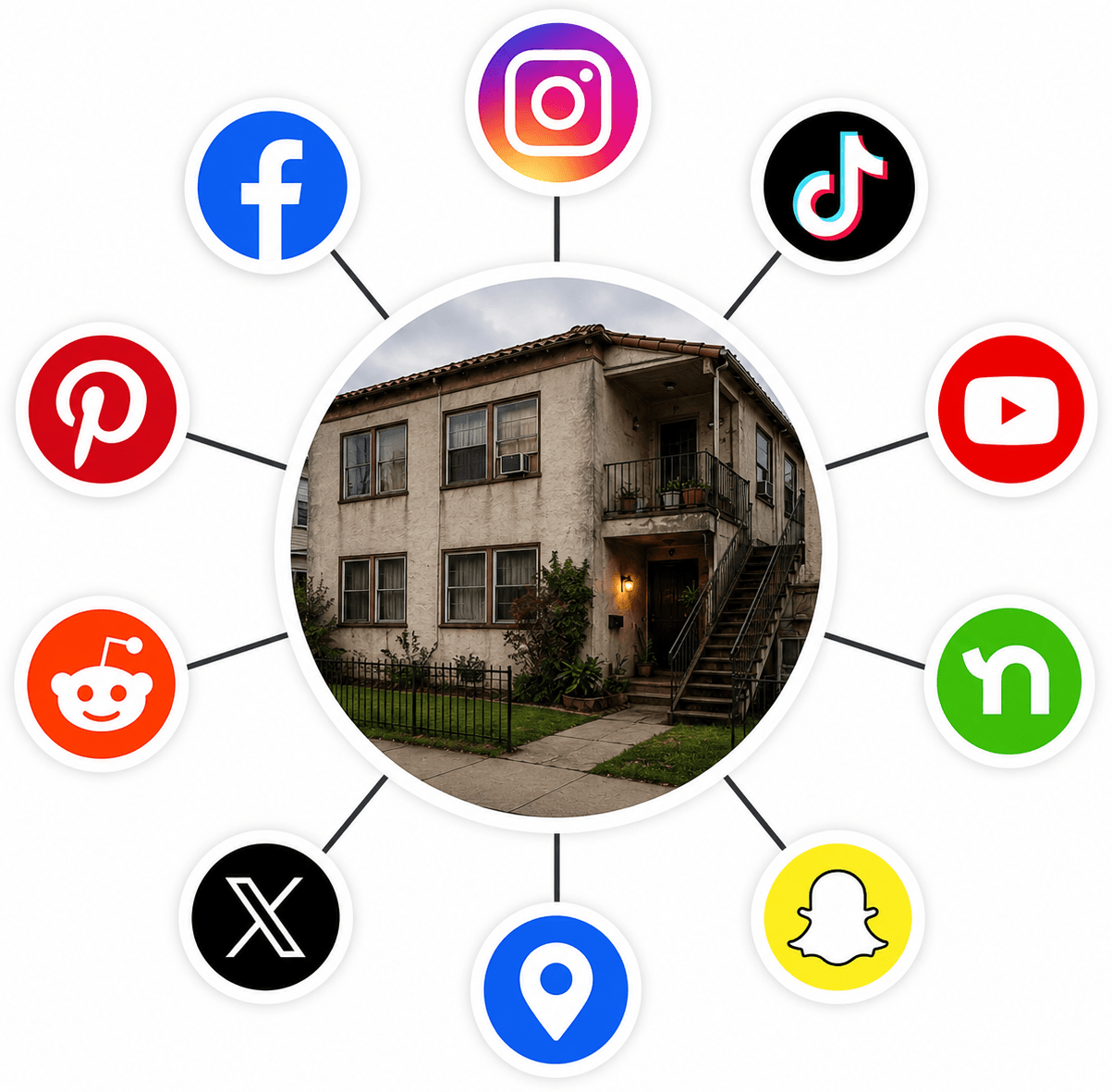
Following the Digital Breadcrumbs: How Social Media Can Help Investigate Lease Violations
Today's online posts can become tomorrow's evidence. More often, however, they simply help answer an important question: What really happened?

![]()
Most lease violations don't begin with an eviction notice. They begin with uncertainty.
A neighbor reports loud parties every weekend. A maintenance worker notices unusual activity in a garage. A property manager receives conflicting accounts about who is living in the unit or what has been happening inside it.
Good property management isn't about making assumptions. It's about asking questions, gathering facts, and following those facts wherever they lead. For years, landlords and property managers have relied on inspections, witness statements, photographs, maintenance records, and common-sense observation. Today, another source of information occasionally joins that list: social media.
Every day, people leave behind digital breadcrumbs. Photos, videos, comments, and short clips often document everyday life without much thought. Individually, those breadcrumbs may reveal very little. Together, they can sometimes help corroborate complaints, establish timelines, or uncover facts that deserve a closer look.
The emphasis, however, should always remain on investigation—not assumptions.


Nuisance: The World Cup Watch Party
Noise complaints are among the most common—and often the most disputed—issues facing housing providers.
Imagine several neighbors complain that a World Cup watch party generated excessive noise, blocked parking, and continued well into the night. Management documents the complaints and follows up with the tenant. Later, the tenant posts photographs and videos from the gathering showing a packed apartment, cheering fans, and the festivities in full swing.
What do those posts actually tell us? That depends on what they show.
A video of 80 people crammed into a one-bedroom apartment with music blaring at 2:00 a.m. paints a very different picture than a handful of friends quietly watching a match on a Saturday afternoon.
The social media posts may help answer questions about the size of the gathering, when it occurred, how long it lasted, and whether they are consistent with complaints received by neighbors and management. Their significance ultimately depends on the surrounding facts and how they fit into the broader investigation.
Unauthorized Alterations: A Remodel That Raises Questions
Sometimes a social media post doesn't document a lease violation. Instead, it raises one.
A tenant proudly shares a time-lapse video of converting a garage into finished living space. Another posts before-and-after photographs of a weekend remodeling project showing new walls, cabinetry, plumbing fixtures, or electrical work.
Those posts don't necessarily establish that the work violated the lease or was performed without authorization. They may, however, prompt an entirely reasonable question: Has something changed inside the rental unit that deserves further inspection? That's often how good investigations begin—not with conclusions, but with curiosity.
Unauthorized Occupants: Looking for Patterns
Questions about unauthorized occupants are rarely answered by a single photograph.
Friends visit. Romantic partners spend the night. Relatives help care for children or aging family members. None of that necessarily creates an unauthorized occupant. What sometimes becomes more informative is a pattern over time.
The same individual repeatedly appears in posts from inside the unit over several months. A move is announced. The apartment is consistently described as "home." Ordinary day-to-day life unfolds from the same location again and again. The posts don't capture special occasions. They capture ordinary life—morning coffee, dinner in the kitchen, working from home, or relaxing in the living room—repeatedly unfolding from the same location over time
One post proves very little. A consistent trail of digital breadcrumbs may help explain why management has reason to ask additional questions.
Like every other aspect of an investigation, those observations should be considered alongside the lease, management's own observations, and any other relevant information—not in isolation.

Other Clues That May Surface Online
Not every situation warrants its own heading, but online activity sometimes points investigators toward issues they may not have otherwise discovered.
Depending on the circumstances, posts may prompt further inquiry into:
- short-term rental activity;
- commercial businesses operating from the rental unit;
- unauthorized pets;
- extensive indoor cultivation or other activity that appears inconsistent with the lease or the property's intended residential use; or
- statements made online that appear inconsistent with positions later taken during a dispute.
These examples aren't offered as proof of wrongdoing. They simply illustrate the kinds of digital breadcrumbs that occasionally become relevant during an investigation.

Preserve the Breadcrumbs Before They Disappear
Unlike leases or maintenance records, online posts can disappear without warning. Photos are deleted. Videos expire. Accounts become private.
If you discover a post that appears relevant, preserve it while it's still available.
Capture the entire screen—not just the photograph itself. Include the username, caption, visible date, and other identifying information whenever possible. If the post contains a video, consider making a screen recording to preserve the content in its original form. Keep the original digital files and make a brief note of when the post was discovered. A printed copy or PDF can provide a useful backup, but it should supplement—not replace—the original digital version.
Good Investigations Follow the Facts
Social media isn't a shortcut. Nor is it a substitute for sound property management.
The strongest investigations still rely on thorough documentation, careful observations, inspections, witness accounts, and a solid understanding of the lease. Online posts simply become another source of information when they help explain what happened.
Housing providers have long been described as the eyes and ears of their property. In today's world, that responsibility sometimes extends to the digital breadcrumbs tenants voluntarily leave behind online. The objective isn't to search for a smoking gun or catch someone in a lie. It's to gather facts, verify information, and make informed decisions based on the complete picture.
After all, the best investigations don't begin with assumptions. They begin with observation, documentation, and the discipline to follow the facts wherever they lead.